
Why Me, God?
Exploring the question that many with disabilities, lifelong mental health problems or others who have experienced trauma have asked the Almighty.


As an AuDHD kid, I used to ask a lot of questions. Looking back, I'm grateful for the patience that was shown to me by some who likely knew something was up with me, but they just didn't have anything solid to go on at the time. Well, here I am 40-some odd years later, and I can promise you I still have a lot of questions. Something that I remember growing up that has changed greatly in me is that I don't feel afraid to ask questions as I did when I was a child. There were plenty of people who did not have that level of patience and understanding with me. They were raised in the old school where kids don't question adults. If you've ever experienced any childhood trauma, I can almost bet it has something to do with being made to feel that any questions you had about things were a sign of disrespect and blatant disobedience, so you just didn't ask the questions at all when you should have.
This leads me to the topic at hand. What happens when not asking questions leads to things happening that you don't like, resulting in lifelong trauma and mental health issues? What happens when you give birth to a child who is not given very long to live when you were assured all was well? It seems there is an endless sea of questions connected to unexpected shifts in our life plans and expectations for ourselves and for our loved ones. Even people who don't believe in God or say they don't at least admit that if God were real, he would not have caused these difficulties in their lives or those of those they love, would He? Why would he cause such challenges in someone that he loves if he, in fact, is love? That is a wonderful question that I am excited to dive into with you today.
A dead man and his best friend
Have you ever prayed a prayer and felt that God was just too late? There is an account of two sisters and their brother who were good friends with a man called Jesus, the Son of God. Jesus was a teacher and prophet who traveled with 12 of his friends, encouraging and healing people along the way. One day, as Jesus was returning from a journey, one of the sisters came to Jesus and told him that her brother, Lazarus, was sick( John 11, NIV). Now, you would think that this would be enough to make him drop everything and go to his friend and heal him. But he didn’t. He told the sisters that “ his sickness would not end in death. No, it is for God’s glory so that God’s Son may be glorified through it.” (verse 4) If you read on, this passage says that Jesus stayed where he was for two additional days. What? Why would the only person who could heal Lazarus delay his return so he could save him? Sadly, when he did return two days later, the sisters informed Jesus that Lazarus had died and was already beginning to decompose (she was actually saying, “he stinks”). If you read the previous verses, the Bible says, “His sickness would not end in death.” But Jesus, he is dead, isn’t he? A few verses later, he tells the twelve friends, “Our friend Lazarus has fallen asleep, but I am going there to wake him up.” He said, without saying it, that he planned this at the beginning. He knew that the greater miracle would not have been in the healing from sickness, but going from being undeniably dead to being fully alive and having a fully restored body as if he had never been dead at all.
It’s his parents' fault
As I mentioned before, Jesus didn’t really have an agenda book listing all the people He planned to meet, heal, and forgive sins for. He often told the 12 friends where they were going; they would start walking with Him, and on the way, He would make “pit stops,” which we now realize were intentional detours the friends did not know about yet.
One day, a man who was blind since birth was in Jesus’ path. The friends who scripture calls “disciples” were perplexed. Much like society and the religious folk of our current day, question certain disabilities that they see as unfair for anyone, but especially a child to live with. Remember what I said about questions? The disciples asked a ton of those, and Jesus never winced out of annoyance and didn’t ignore the hard questions but addressed them with confidence and truth. So they asked him, “Rabbi, who sinned, this man or his parents, that he was born blind?” (John 9:1 NIV) The response to this was immediate and firm. He said, “Neither this man nor his parents sinned,” said Jesus, “but this happened so that the works of God might be displayed in him.” (verse 3) Like with Lazarus, the miracle would come, but not before this man endured infancy, childhood, adolescence, and now adulthood with a disability. There was no braille. No special schools or SSI. As a blind person, the man would have experienced significant challenges in his life, making life hard to live. Why would Jesus wait so long to heal this man? Couldn’t he have just made him “not blind?” Well, sure, but what would be the miracle in that?
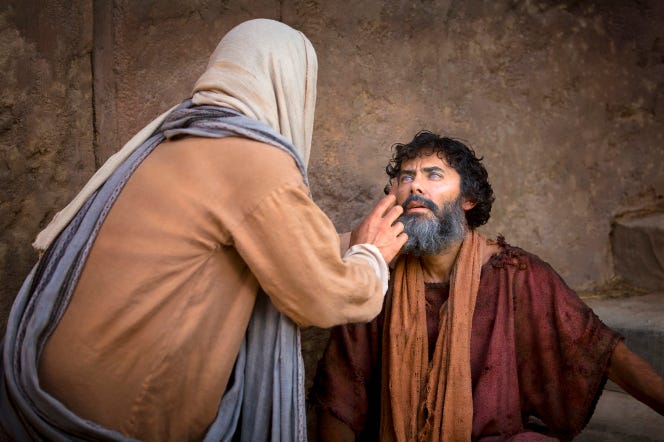
The Son of Man did not create human life to merely exist for a lifetime and then fade away. He made each life with purpose, so that the glory of Heaven can be displayed for all to see. To see that the hand of God knows no boundaries and wants to touch every life that wants to be touched. He didn’t come to prevent pain from entering our lives. He came to walk with us through that pain so that we may experience His strength to make it through and be better than we were before. His glory is projected on the world’s vast screen when something impossible instantly changes or miraculously shifts. He means for our challenges to touch other people’s lives so that they, too, may know that they can rise despite the great hurt, pain, or challenges they face. He is not hovering over us. God is with us
A joke for the road:
“Why did the teddy bear say no to dessert? Because she was stuffed.”
I hope this helped you in some way today. I hope you will come back again soon. Thank you for reading along!